

“`html
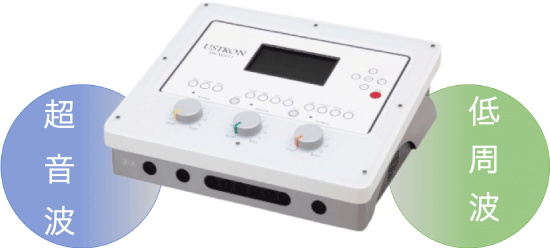
ASTRON is a combination therapy device that can deliver
ultrasound (1 MHz and 3 MHz) together with
electrical stimulation ranging from low to high frequencies, depending on the patient’s condition.
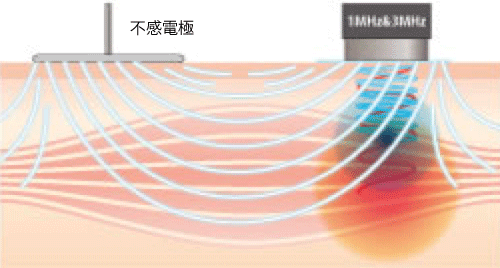
It can be used for a wide range of musculoskeletal concerns, including chronic pain and discomfort in deeper tissues that may be difficult to address with conventional treatment alone.
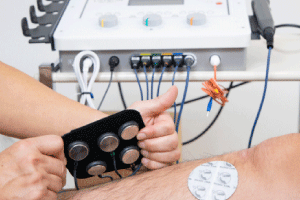
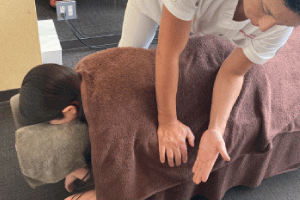
Combining ASTRON with our original 4D Body Alignment Therapy allows the two approaches to complement each other.
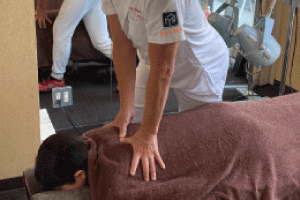
Combining ASTRON with our clinic’s massage techniques allows both approaches to be used together as part of an integrated treatment program.
Ultrasound therapy uses sound waves that vibrate at frequencies too high to be heard.
The fine vibrations provide a
micro-massage effect
at the tissue level together with a
thermal effect,
which may help reduce stiffness and discomfort in muscles and joints.
Ultrasound is also used to support tissue recovery processes.
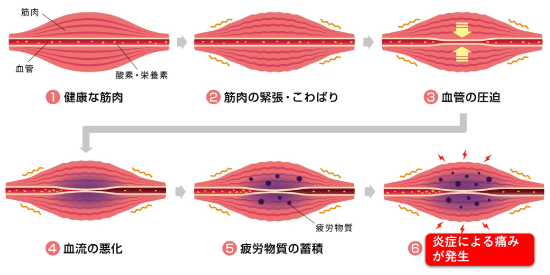
For example, when the shoulders are stiff, circulation around the shoulder area may be reduced and the muscles may remain contracted.
This can allow metabolic waste products associated with muscle fatigue to accumulate.
Ultrasound provides thermal and mechanical stimulation that may support circulation and relaxation of the surrounding tissues.
It can also be used appropriately for acute injuries such as bruises, sprains, and muscle strains, depending on the condition.
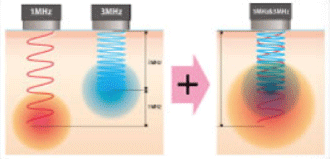
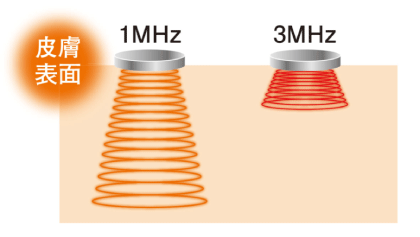
The frequency can be switched between 1 MHz and 3 MHz.
1 MHz: deeper tissues
3 MHz: superficial tissues
Low-frequency electrical therapy and EMS are based on similar principles.
One major difference is whether the device has been certified as medical equipment.
There may also be differences in approved purposes of use and insurance coverage between certified low-frequency therapy devices and consumer EMS equipment.
Although the term “low-frequency therapy device” may suggest that the machine only uses low-frequency current, certified medical devices may also employ medium- or higher-frequency electrical currents depending on the system.
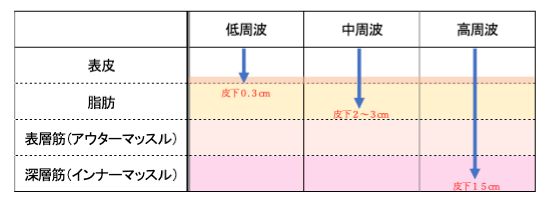
Like ultrasound therapy, electrical therapy can provide a massage-like effect.
Instead of transmitting mechanical vibration like ultrasound, electrical stimulation causes the muscles themselves to contract and relax, providing a
muscle-stimulation effect.
This may support circulation, increase local muscle temperature, and help reduce pain and discomfort.
Unlike ultrasound, which may produce little noticeable sensation, electrical therapy can often be felt as tingling stimulation or visible muscle contractions.
Electrical stimulation may also be used based on the gate control theory of pain.
By stimulating faster-conducting sensory nerves, it may help inhibit transmission through slower pain pathways.
Different frequencies of electrical stimulation have also been studied in relation to the body’s endogenous pain-modulating mechanisms.
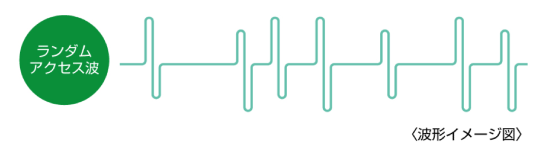
The Random Access Wave is a complex waveform that randomly switches among four frequencies while also varying the timing of pulse stimulation.
By continuously changing the waveform, frequency, voltage, and current, the system is designed to provide sufficient stimulation to the treatment area while reducing unnecessary discomfort at the skin surface.
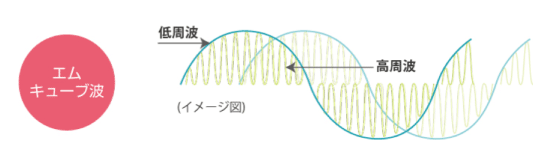
The M-Cube Wave uses modulated higher-frequency electrical currents that are designed to pass comfortably through the skin and create various lower-frequency stimulation patterns within deeper tissues.
Its deep-reaching characteristics allow it to stimulate muscles regardless of differences in superficial fat or muscle thickness.
It may be used to activate deeper muscles and support muscle conditioning and relaxation.
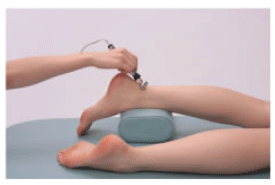
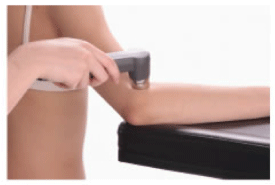
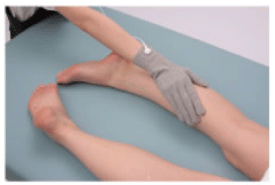
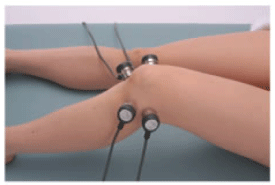
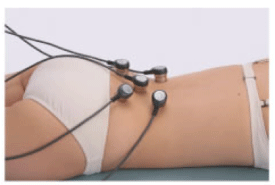
Combination therapy generally uses Mode A
Ultrasound generally uses 1 & 3 MHz
Duty cycle is generally 100%, except during the acute stage (20%, output intensity 0.2–0.5 W/cm²)
Intervals are generally not used
| Ultrasound | |||
|---|---|---|---|
| Time | Frequency | Output Intensity | Duty Cycle |
| 10–15 min | 1 & 3 MHz | 1.0–2.0 W/cm² | 100% |
| TECTRON | ||||
|---|---|---|---|---|