

Are you experiencing neck stiffness, shoulder tension, headaches, or eye strain in Phnom Penh?
If you spend long hours working at a desk or using a smartphone, you may frequently adopt a posture
in which your head moves forward. This condition is commonly known as forward head posture or
“straight neck.”
In this article, we explain the causes and symptoms of forward head posture, as well as the
chiropractic care, acupuncture, and rehabilitation treatments available at PAPC.
What You Will Learn in This Article
- What forward head posture and straight neck mean
- Why desk work can cause neck and shoulder discomfort
- Why symptoms may return after massage alone
- How chiropractic care, acupuncture, and rehabilitation can help
- How PAPC approaches forward head posture
Do You Have Any of These Symptoms?
- Your neck and shoulders feel heavy while working at a desk
- You spend long periods using a smartphone
- You experience pain or discomfort when tilting your head backward
- You frequently experience headaches or eye strain
- Your shoulder stiffness is accompanied by heaviness in your arms
- You have been told that your posture is poor or that your head sits too far forward
- Your symptoms return soon after receiving a massage
- You want to address the underlying causes of forward head posture
What Is Forward Head Posture?
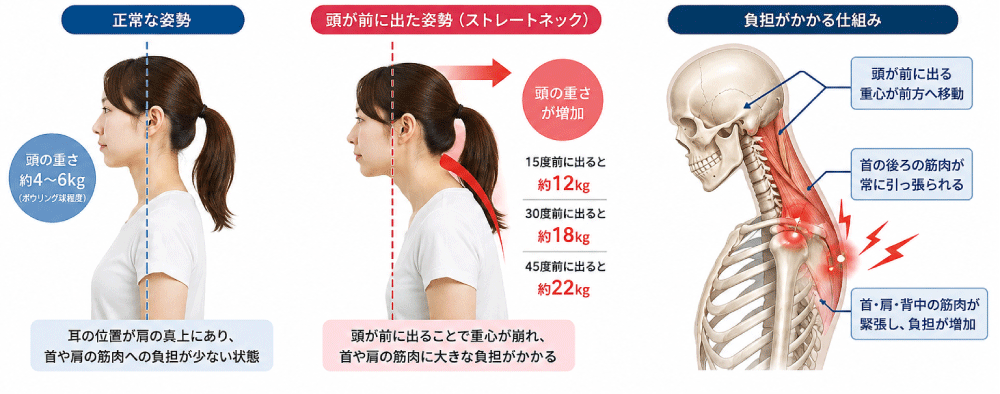
Forward head posture, sometimes called straight neck, refers to a condition in which
the natural gentle curve of the cervical spine becomes reduced and the head sits
farther forward than its ideal position.
It can develop when you repeatedly look down at a smartphone or lean toward a computer
screen for extended periods.
Because the adult head has considerable weight, moving it forward increases the load
placed on the muscles of the neck and shoulders.
This may contribute to neck stiffness, shoulder tension, upper-back tightness,
headaches, and eye strain.
Forward head posture is not simply a problem involving the shape of the neck.
Rounded shoulders, the position of the shoulder blades, pelvic alignment, and shallow
breathing may also affect overall posture and increase strain on the neck.
Why Desk Work Causes Neck and Shoulder Discomfort
Desk work often requires the body to remain in the same position for long periods.
A low computer monitor, an improperly adjusted chair or desk, or prolonged use of a
laptop can make it easier for the head to move forward.
When the shoulders rotate inward while using a keyboard or mouse, the muscles in the
chest may become tight and the shoulder blades may move less effectively.
Over time, the muscles around the neck and shoulders remain under continuous tension,
which may contribute to reduced circulation, stiffness, and fatigue.
In Phnom Penh, long hours of office work may be combined with extended travel by car
or motorbike and exposure to strong air conditioning.
These factors can further contribute to neck and shoulder discomfort.
Common Causes of Forward Head Posture Among Desk Workers
- Long hours of computer work
- Frequently looking down at a smartphone
- Using a laptop with a low screen position
- Rounded shoulders and poor sitting posture
- Reduced movement of the shoulder blades and upper back
- Muscle weakness caused by insufficient exercise
- Remaining in the same position for extended periods
Why Neck Stiffness May Return After Massage Alone
Massage can temporarily reduce muscle tension and make the neck and shoulders feel lighter.
However, if the forward position of the head, limited shoulder-blade movement, and poor
workstation setup remain unchanged, the same areas may quickly become overloaded again.
With forward head posture, the problem may not be limited to the area where discomfort
is felt.
Tightness or restricted movement in the chest, upper back, shoulder blades, and pelvis
may also affect the position of the neck.
For this reason, it is important to assess the balance of the entire body rather than
treating the neck alone.
Maintaining an appropriate posture also requires adequate mobility and strength in the
upper back and core muscles.
Addressing posture and movement habits, in addition to reducing symptoms, can help create
a body that is less likely to experience recurring discomfort.
Why We Combine Chiropractic Care, Acupuncture, and Rehabilitation
Neck stiffness and shoulder tension related to forward head posture may involve several
factors, including muscle tightness, restricted joint movement, posture, and daily
movement habits.
At PAPC, we do not limit treatment to a single method.
After assessing your physical condition, we may combine neurological manual therapy,
chiropractic care, acupuncture, massage, stretching, and rehabilitation according to
your symptoms and treatment goals.
Neurological Manual Therapy
We assess movement, physical responses, nerve function, and joint mobility,
using gentle stimulation to support better movement and overall body balance.
Acupuncture
Acupuncture may be considered when there is significant tension in the muscles
around the neck, shoulders, and shoulder blades.
Chiropractic and Manual Therapy
We assess movement in the neck, upper back, shoulder blades, and rib cage while
working to improve overall physical balance.
Massage
Manual techniques are applied with appropriate pressure according to muscle tension
and fatigue in the neck, shoulders, and upper back.
Rehabilitation and Exercise Therapy
Shoulder-blade exercises, upper-back mobility exercises, and core training are used
to help the body maintain a more appropriate posture.
Posture and Movement Assessment
We assess your desk posture and daily movement patterns and explain practical points
that can help reduce strain in everyday life.
PAPC Provides Treatment Tailored to Each Patient
At PAPC, you do not need to decide in advance whether you should receive
neurological manual therapy, acupuncture, massage, or another type of treatment.
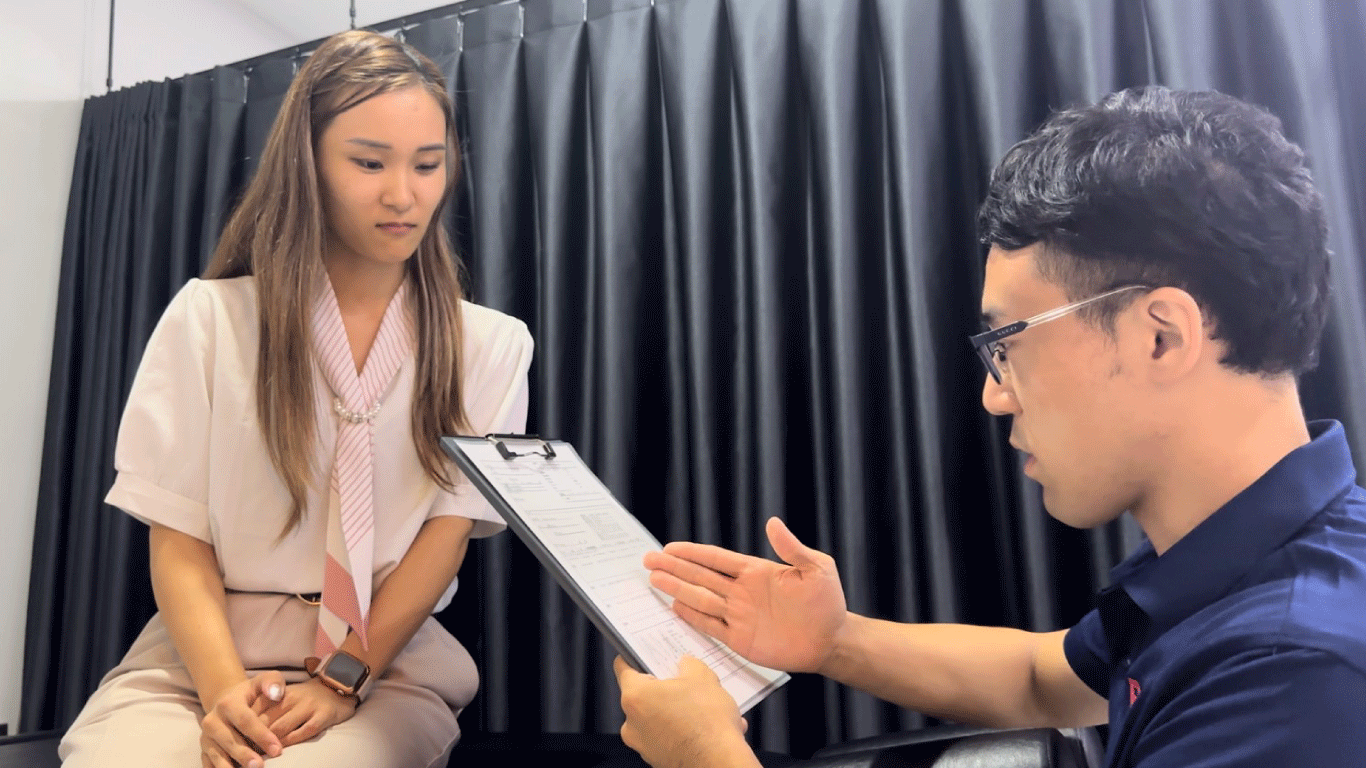
A practitioner with a Japanese national qualification will assess not only the
condition of your neck and shoulders, but also your posture, shoulder-blade movement,
upper-back and chest flexibility, and daily movement habits.
Based on this assessment, we recommend an appropriate combination of neurological
manual therapy, chiropractic care, acupuncture, massage, and rehabilitation.
Our goal is not only to temporarily relieve pain and stiffness, but also to help you
build a body that is less likely to develop recurring symptoms while continuing your
desk-based work.
We also provide advice on posture improvement and self-care.
PAPC Treatment Process for Forward Head Posture
- Discuss neck stiffness, shoulder tension, headaches, and other symptoms
- Assess posture and the movement of the neck, shoulder blades, and upper back
- Provide neurological manual therapy, acupuncture, or manual treatment according to the findings
- Introduce stretching or exercise therapy when appropriate
- Explain desk-posture adjustments and practical self-care methods
Seek Medical Care if You Have Severe Pain or Numbness
If neck or shoulder discomfort is accompanied by severe numbness in the arms or hands,
reduced grip strength, difficulty applying force, fever, or a severe headache,
an examination at an orthopedic clinic or other medical facility may be necessary.
At PAPC, we assess your condition before treatment.
If we determine that medical examination or diagnosis should take priority over manual
treatment, we will recommend that you visit an appropriate medical institution.
FAQ
Frequently Asked Questions About Forward Head Posture
Can chiropractic care improve forward head posture?
The appropriate treatment depends on your symptoms and physical condition.
Chiropractic and manual therapy may help improve movement in the neck, shoulders,
upper back, and shoulder blades.
Reviewing posture and movement habits may also help reduce strain on the neck and shoulders.
Can I receive acupuncture for neck stiffness or shoulder tension?
Yes. After assessing your physical condition, we may recommend acupuncture when it is
considered appropriate.
PAPC uses thin, Japanese-made acupuncture needles, and treatment is provided by a
practitioner with a Japanese national qualification.
Can I consult PAPC about headaches and eye strain?
Yes, particularly when the symptoms may be related to neck and shoulder tension or
postural imbalance.
However, if you experience a sudden severe headache, nausea, paralysis, or weakness
in your arms or legs, seek medical attention immediately.
I do not know which treatment menu to choose.
If you are unsure which menu to select, please choose Standard Treatment.
A practitioner with a Japanese national qualification will assess your condition
and recommend an appropriate combination of neurological manual therapy,
chiropractic care, acupuncture, massage, and rehabilitation.
Can I receive treatment while continuing desk work?
Yes.
We can also review your working posture and desk environment and provide practical
advice about stretching, movement breaks, and posture adjustments that can be used
during the working day.
CONSULTATION & APPOINTMENT
Forward Head Posture Treatment in Phnom Penh
At PAPC, a practitioner with a Japanese national qualification will assess not only
your neck and shoulders, but also your posture and the movement of your shoulder blades
and upper back.
We combine neurological manual therapy, chiropractic care, acupuncture, massage, and
rehabilitation to support people experiencing neck stiffness, shoulder tension,
headaches, and other symptoms related to desk work.
Please contact us if your symptoms continue to return even after receiving massage.