

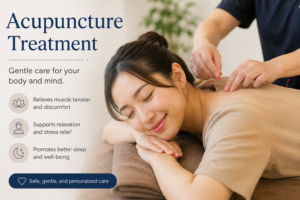
Acupuncture Treatment
Acupuncture is a traditional treatment that uses very thin needles to gently stimulate specific points on the body. Although the idea of acupuncture may seem unfamiliar to some people, modern acupuncture treatment is generally performed in a calm and carefully controlled environment.
Many people choose acupuncture because they are looking for a gentle approach to managing physical discomfort, muscle tension, stress, or general well-being.
At Phnom Penh Acupuncture Physiotherapy Center (PAPC), acupuncture is provided as part of an individualized approach. The practitioner first listens to your concerns and checks your physical condition before deciding which areas should be treated.
The goal is not simply to insert needles. A good acupuncture session begins with understanding the person’s condition and selecting an appropriate treatment approach.
One of the most common questions is, “Does acupuncture hurt?”
Because acupuncture needles are extremely thin, the sensation is usually much lighter than people expect. You may feel a small touch, a brief sensation, or a mild pressure when the needle is inserted.
Some people feel almost nothing.
During treatment, you may notice a gentle heaviness, warmth, tingling, or relaxing sensation around the treatment area. Everyone experiences acupuncture differently, so it is important to communicate with your practitioner if you feel uncomfortable.
If you have never tried acupuncture before, it is completely normal to feel nervous. A professional practitioner should explain the process and make you feel comfortable before treatment begins.
Acupuncture traditionally focuses on specific points on the body. From a modern healthcare perspective, acupuncture stimulation may influence the nervous system and local tissues.
The treatment can also be combined with other approaches, such as physiotherapy, stretching, exercise therapy, or manual techniques, depending on the person’s needs.
Acupuncture is not necessarily about treating only the area where you feel discomfort.
For example, someone with shoulder tension may also have stiffness in the neck, upper back, or changes in posture. A practitioner may therefore consider the whole body when planning treatment.
This individualized approach is one reason why acupuncture is used by many people as part of their overall health and wellness routine.
People seek acupuncture treatment for many different reasons.
Common concerns include:
Acupuncture should not be considered a guaranteed cure for these conditions. The appropriate treatment depends on the individual’s health, symptoms, medical history, and physical condition.
If you have severe, sudden, or unexplained symptoms, it is important to seek appropriate medical evaluation rather than relying only on acupuncture.
If it is your first acupuncture treatment, knowing what to expect can make the experience much easier.
Your practitioner will first ask about your current condition, symptoms, lifestyle, and treatment goals.
You may also be asked about previous injuries, physical activity, sleep, stress, or other factors that could be relevant to your condition.
Depending on your symptoms, the practitioner may check posture, movement, muscle tension, joint mobility, or other physical factors.
This helps create a treatment plan that is appropriate for you.
Very thin, sterile, single-use needles are carefully inserted into selected points.
The number and location of needles can vary depending on the treatment plan.
You will normally remain in a comfortable position while the needles are in place. Many people find this time relaxing.
After the session, you may be advised to drink water, avoid excessive physical stress immediately after treatment, and pay attention to how your body feels.
Your practitioner may also recommend stretching, exercise, posture correction, or other self-care depending on your condition.
Japanese acupuncture is often associated with a gentle and detailed treatment style.
For people who are nervous about needles, a gentle approach can make the treatment experience more comfortable.
The exact techniques used can vary between practitioners, so it is important to ask your practitioner about their training and treatment methods.
At PAPC, we aim to provide a calm treatment environment while carefully considering each person’s physical condition and individual needs.
Acupuncture does not have to be used as a standalone treatment.
For people with movement-related problems, combining acupuncture with physiotherapy may be useful as part of a broader treatment program.
For example, a physiotherapy program may include:
Acupuncture may be included depending on the individual’s condition and treatment goals.
The important point is that treatment should focus not only on temporary comfort but also on helping you understand your body and improve movement when appropriate.
Acupuncture may be suitable for many adults, but it is not appropriate for every person or every situation.
Before treatment, tell your practitioner about medications, medical conditions, pregnancy, allergies, bleeding problems, recent surgery, or any other important health information.
A qualified practitioner should assess whether acupuncture is appropriate for you.
People should also avoid delaying necessary medical care because they are trying acupuncture. If you experience severe chest pain, difficulty breathing, sudden weakness, serious injury, or other emergency symptoms, seek urgent medical attention.
Comfortable clothing is usually best.
Depending on the treatment area, your practitioner may need access to your lower legs, arms, back, or other areas. Loose clothing can make the process easier.
If you are visiting an acupuncture clinic for the first time, you can ask the clinic beforehand what clothing is recommended.
Most people can return to their normal daily activities after acupuncture, depending on how they feel and what treatment they received.
It can be helpful to:
Everyone responds differently, so your aftercare recommendations may vary.
When choosing an acupuncture clinic in Phnom Penh, do not look only at the price.
Consider the practitioner’s qualifications, experience, hygiene standards, communication, and whether the clinic provides an appropriate assessment before treatment.
A good treatment experience should begin with listening to your concerns.
At Phnom Penh Acupuncture Physiotherapy Center, our approach combines acupuncture and physiotherapy perspectives when appropriate. We focus on understanding the individual rather than providing exactly the same treatment to everyone.
If you have never experienced acupuncture before, you do not need to know everything before your first visit.
You can simply explain what you are experiencing, what activities are difficult, and what you would like to improve.
Your practitioner can then explain the treatment options and answer your questions.
Acupuncture can be a gentle treatment option for people who want support with relaxation, muscle tension, and certain types of physical discomfort. When combined with appropriate assessment, exercise, and physiotherapy, it can also become part of a broader approach to physical health.
The most important thing is to choose a professional clinic where you feel comfortable asking questions and discussing your condition.
Acupuncture treatment is more than simply placing needles on the body. A thoughtful treatment begins with understanding the person’s condition, lifestyle, movement, and individual goals.
For people experiencing muscle tension, physical discomfort, stress, or movement-related concerns, acupuncture may be one option to consider as part of a broader health and wellness approach.
If you are considering acupuncture in Phnom Penh, start with a consultation and discuss your concerns with a qualified practitioner. A gentle, individualized approach can help make your first acupuncture experience comfortable and easy to understand.
PAPC – Phnom Penh Acupuncture Physiotherapy Center provides acupuncture and physiotherapy services with an emphasis on individualized care and a comfortable treatment environment.
© Copyright (C) All Rights Reserved..