

Our clinic’s aromatherapy oil massage is a treatment menu provided by nationally licensed practitioners who understand the structure of the human body and perform treatments based on anatomy and physiology.
In addition to the relaxing effects of aromatic scents, we focus on muscles, blood circulation, and lymphatic flow, taking a comprehensive approach to fatigue, cold sensitivity, swelling, tension, and autonomic nervous system imbalance.
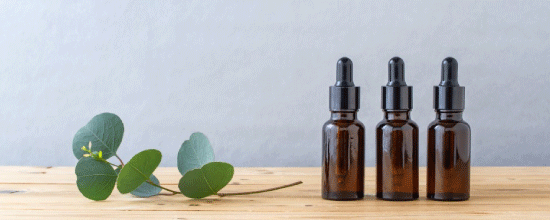
Discomfort such as general fatigue, tiredness, cold sensitivity, and swelling experienced in daily life may be related to various factors, including poor posture, muscle tension, stress, lack of sleep, and reduced blood and lymphatic circulation.
At our clinic, we assess each patient’s physical condition and provide treatment tailored to the individual.
Aromatherapy oil massage combines the relaxing effects of fragrance with hands-on treatment.
By gently gliding the hands over the skin, the treatment helps ease muscle tension, support blood and lymphatic circulation, and reduce swelling, cold sensitivity, and fatigue.
Prolonged stress may also disrupt the balance of the autonomic nervous system, which can contribute to insomnia, cold sensitivity, stiff shoulders, lower back pain, headaches, fatigue, and difficulty feeling refreshed even after sleep.
The pleasant stimulation created by aromatic scents and massage helps the mind and body enter a more relaxed state and supports physical recovery.
Aromatherapy oils are thought to influence the mind and body mainly through two pathways.
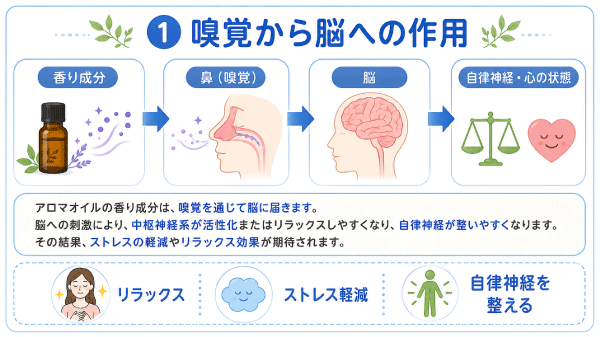
The first is through the sense of smell, where aromatic compounds are transmitted from the nose to the brain.
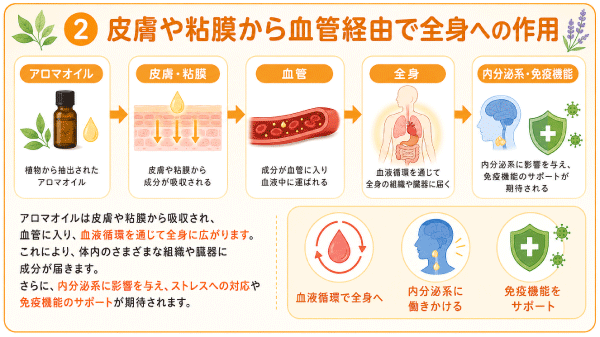
The second is through partial absorption of certain components through the skin and mucous membranes, after which they may circulate throughout the body via the bloodstream.
In aromatherapy oil massage, hands-on stimulation is also added, which may help relax muscle tension, promote blood circulation, and support lymphatic flow.
Here, we explain step by step how aromatherapy oils are thought to act on the body.
The aromatic compounds in essential oils are inhaled through the nose and transmitted to the brain through the olfactory system.
Scent information is believed to reach the limbic system, which is involved in emotions and instinctive responses, as well as the hypothalamus, which is involved in autonomic nervous system regulation and hormone secretion.
For this reason, fragrance may influence emotional well-being and support relaxation, stress reduction, mood changes, and autonomic nervous system balance.
Some components of aromatherapy oils are thought to be absorbed through the skin and mucous membranes, enter the bloodstream, and circulate throughout the body.
In this way, aromatic compounds may reach various tissues and organs and potentially influence the endocrine system, immune function, and autonomic nervous system.
When stress continues for a long period, the balance of the autonomic nervous system and endocrine system can become disrupted.
The pleasant stimulation provided by aromatherapy oils and massage may help ease physical tension and support a body state that is more conducive to relaxation.
The autonomic nervous system consists of the sympathetic nervous system, which tends to become more active during activity or stress, and the parasympathetic nervous system, which tends to become more active during rest and relaxation.
When sympathetic activity is dominant, heart rate and blood pressure may rise, and the body tends to remain in a more tense state.
On the other hand, when the parasympathetic nervous system is more active, heart rate and breathing tend to calm down, digestive activity is supported, and the body can enter a more restful state.
Aromatherapy oil massage supports a state in which the parasympathetic nervous system can function more effectively through both fragrance and hands-on treatment.
By diluting essential oils in a carrier oil and gently massaging the surface of the skin, the treatment may help ease muscle tension and support blood and lymphatic circulation.
The lymphatic system plays an important role in removing waste products from the body and supporting immune function.
Improving lymphatic flow may help reduce swelling, cold sensitivity, a heavy or sluggish feeling in the body, and decreased metabolism.
At our clinic, treatment is performed with an understanding of muscle anatomy and the location of lymph nodes.
Rather than simply moving fluid, we provide a safe approach based on the structure of the body.
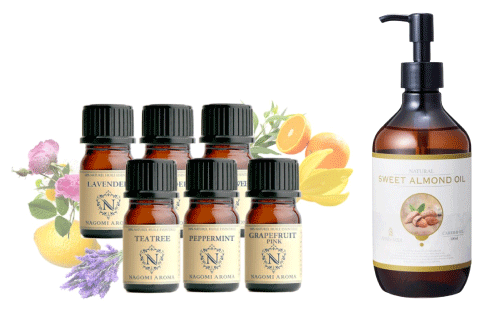
At our clinic, we primarily use almond oil as a base because it blends well with the skin and has excellent moisturizing properties.
Almond oil helps reduce friction during massage and makes it easier to perform treatment while gently protecting the skin.
It is important to select essential oils according to the purpose of treatment and the patient’s physical condition.
Different fragrances may be chosen depending on whether the goal is relaxation, a refreshing sensation, or relief from tension.
Some essential oils should be avoided by pregnant individuals, people with certain medical conditions, or those taking medication, so we place great importance on confirming health conditions in advance.
Aromatherapy oils can support relaxation and help reduce discomfort through methods such as inhalation and massage.
Here, we introduce representative ways aromatherapy may be used according to different goals, including headaches, difficulty sleeping, muscle tension, breathing discomfort, and seasonal symptoms such as pollen-related discomfort.
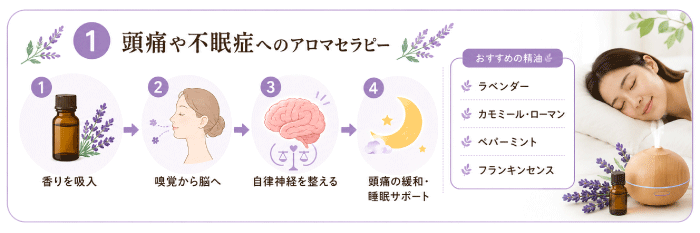
When you experience headaches or difficulty sleeping, aromatherapy care using inhaled fragrances may gently stimulate the brain through the sense of smell.
Fragrance stimulation can help calm the mind and support balance in the autonomic nervous system.
Gentle scents such as lavender and Roman chamomile can help ease tension and stress and encourage a relaxed state.
Using aromatherapy before bedtime may help calm the mind and support a more comfortable sleep environment.
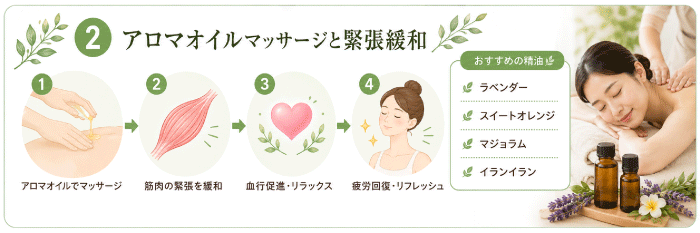
Massage using aromatherapy oils is an accessible care method for easing muscle tension and supporting circulation.
By gently applying the oil to areas such as the shoulders, neck, back, and legs, it may help reduce stiffness, heaviness, and fatigue.
Because the relaxing effect of fragrance is also added, this treatment is recommended when you want to release both physical and mental tension or refresh yourself after accumulated fatigue.
When essential oils are applied directly to the skin, they must always be diluted with a carrier oil.
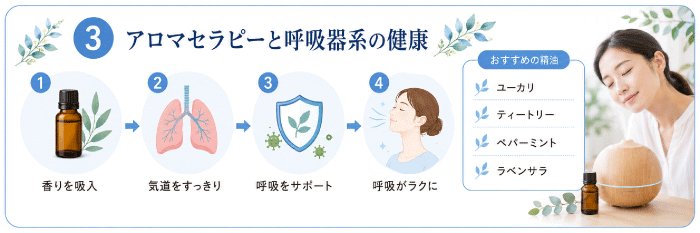
Fresh scents such as eucalyptus, tea tree, and peppermint are commonly used when nasal or throat discomfort is a concern.
Using these fragrances through aromatherapy diffusion or steam inhalation may help create an environment that feels easier and more comfortable to breathe in.
During dry seasons or when indoor air feels stuffy, using a diffuser to spread fragrance through the room may help create a refreshing atmosphere and make it easier to focus on comfortable breathing.
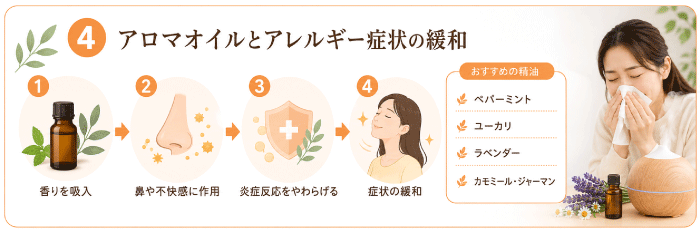
When symptoms such as nasal irritation, sneezing, or itchy eyes caused by pollen or dust are bothersome, refreshing or gentle fragrances may help calm the mind and make discomfort feel easier to manage.
Peppermint and eucalyptus provide a refreshing sensation, while lavender and German chamomile may be suitable when you want to reduce stress associated with seasonal discomfort.
If symptoms are severe or persistent, it is important to consult a medical professional.
At our clinic, treatments are provided by nationally licensed practitioners who have professionally studied anatomy, physiology, and the structure of the human body.
Because our practitioners understand the location and depth of muscles, lymphatic flow, and the position of lymph nodes, they can provide treatment tailored to each patient’s goals while taking care to minimize unnecessary strain on the body.
There are many different types and purposes of aromatherapy oil massage.
Rather than focusing solely on relaxation, we assess muscle tension, blood circulation, lymphatic circulation, ease of breathing, and the condition of the autonomic nervous system, and provide treatment according to the individual’s physical condition.
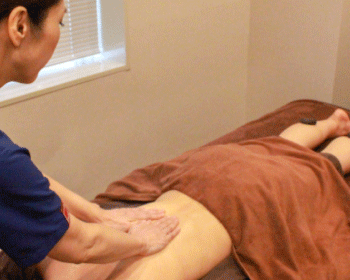
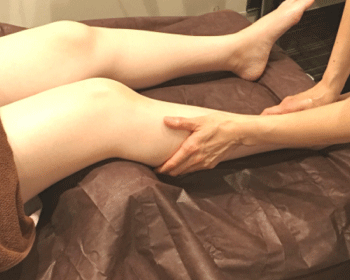
After the treatment, excess oil is gently wiped away with a warm towel.
To help maintain skin moisture, a small amount of oil is intentionally left on the skin, so there is no need to take a shower immediately after treatment, making the service easy and convenient to receive.
The relaxing effects of aromatherapy, combined with the release of muscle tension, may help make breathing easier and support better blood and lymphatic circulation.
As the body relaxes and circulation becomes easier to maintain, this may also support better sleep quality and a body that is less prone to accumulating fatigue.
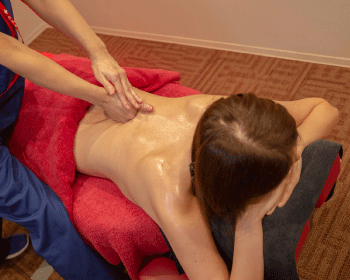
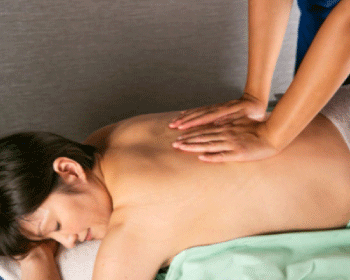
At our clinic, we confirm each patient’s physical condition and medical history before treatment and provide care with careful consideration for safety.
If you have any concerns, please feel free to consult with us before your treatment.
© Copyright (C) All Rights Reserved..