“`html
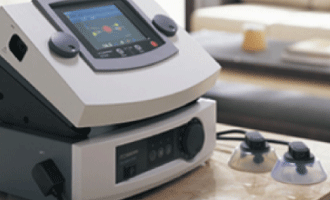
ES-530 3D Dynamic Interferential Current Therapy (ITO CO., LTD.)
The ES-530 is an electrical stimulation therapy device manufactured by ITO CO., LTD. It is used in a wide range of fields, including the care and conditioning of elite athletes and Olympic-level competitors.
The ES-530 provides a variety of electrical stimulation options, including three-dimensional medium-frequency stimulation, high-voltage stimulation targeting deeper tissues, and microcurrent stimulation. Nine different treatment modes can be selected and combined with different electrodes according to the treatment purpose and the patient’s condition.
Three-dimensional medium-frequency currents intersect within the target area to provide stimulation between the electrodes. This mode is designed to stimulate tissues over a three-dimensional area and may be used to support pain management. It is particularly suitable for deeper stimulation and may also be used around joints.
This mode delivers an extremely weak electrical current of 0–1,000 μA, approximately 1/1,000 of the current used in the 3D Dynamic Interferential Current® Mode. It is ITO’s proprietary treatment mode that combines microcurrent therapy with three-dimensional interferential stimulation and is designed to reach deeper areas than conventional MCR Mode.
High-voltage electrical stimulation is designed to reach deeper tissues and may be used to support pain reduction, circulation, and tissue recovery.
Learn more about research on the effects of microcurrent therapy
Microcurrent therapy uses an extremely weak electrical current measured in μA (10-6A). It is used to support the tissue recovery process and may also help reduce muscle soreness after sports activities. Because the stimulation can be delivered below the sensory threshold, it can also be used around the face and surrounding injured areas.
This mode provides relatively low skin stimulation while allowing electrical stimulation to reach deeper areas. Because four electrodes are used, it is suitable for treating wider areas such as the entire shoulder region.
This mode provides relatively low skin stimulation while allowing electrical stimulation to reach deeper tissues. Because two electrodes are used, it is suitable for more localized areas such as the arm.
Electrical stimulation produces muscle contractions to support muscle strengthening. This type of stimulation is widely used in medicine, health science, rehabilitation, and sports science.
Russian current stimulation is used to electrically stimulate the muscles.
Electrical stimulation is applied to support pain management.
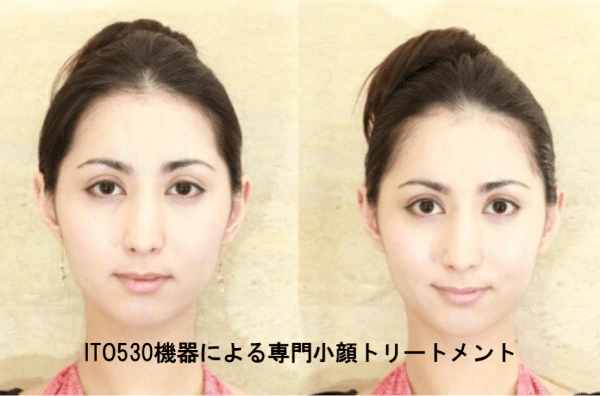
*Example of changes observed on the same day following our cosmetic acupuncture treatment combined with ES-530 therapy.
The electrical current is designed to stimulate a broad area of tissue three-dimensionally, including deeper regions within the area reached by the current. In addition to being used for muscle, ligament, and nerve care, this form of physical therapy may also support circulation and muscle conditioning.
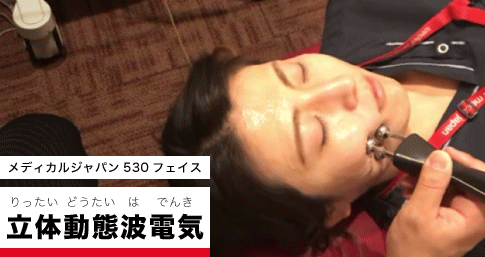
Click here to watch the video
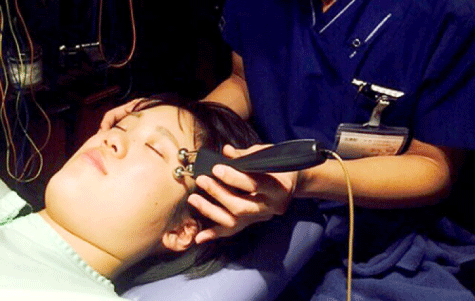
Facial care using the ES-530 3D Dynamic Interferential Current® Mode provides three-dimensional electrical stimulation. Three electrodes are placed on the face, allowing medium-frequency currents to intersect three-dimensionally and stimulate both the surface of the skin and the facial muscles.
Electrical stimulation can activate facial muscles, including muscles that are frequently used as well as those that may not normally be activated sufficiently. This allows stimulation to reach deeper tissues that may be difficult to access manually, while supporting muscle activation and facial conditioning.
“`