

ReaLine Core is an exercise support device designed to correct alignment of the pelvis and rib cage, which form the central “core” of the body. By helping restore proper positioning of the pelvis and rib cage, it may support improved posture, reduced physical discomfort, and better movement performance. Its simple design makes it suitable for anyone who wants to improve overall body balance.
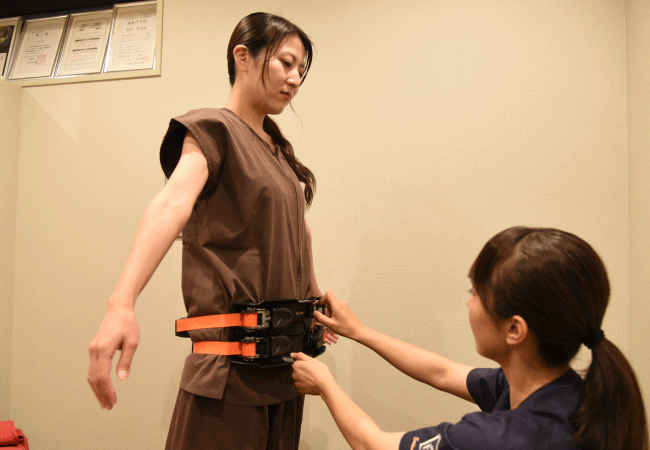
ReaLine Core is used as part of a program designed to improve alignment of the pelvis and rib cage. Before treatment, we first assess range of motion through movements such as forward bending, backward bending, and rotation to identify areas of imbalance. After putting on ReaLine Core, the following movements are performed to help the body become accustomed to a more appropriate alignment.
Marching in place: Supports pelvic stability and helps balance the left and right sides.
Deep breathing: Encourages deeper breathing while increasing awareness of rib cage movement and chest expansion.
Rotational movements: Promotes smoother coordination between the rib cage and pelvis and helps improve overall mobility.
By combining alignment correction with movement in this way, the body can gradually return to a more natural position without excessive force and develop more efficient movement patterns.
One of the main features of ReaLine Core is that it not only helps correct alignment but also helps the body “learn” the proper position. By repeatedly exercising while wearing the device, the body becomes more familiar with the sensation of keeping the pelvis and rib cage in a more balanced position, making it easier to maintain that posture during everyday activities.
Another feature of ReaLine Core is that alignment is addressed while the body is moving. Unlike static stretching or conventional correction devices, incorporating movement helps the body develop more natural alignment patterns and may help maintain the effects for longer periods.

ReaLine Core is used in a wide range of settings, including by elite athletes, rehabilitation facilities, treatment clinics, fitness clubs, and school sports teams. Although it is often associated with Olympic athletes, professional baseball players, and national team athletes, it is not designed only for elite performers. It was developed for anyone experiencing discomfort or imbalance around the pelvis or rib cage.
Many people who have used ReaLine Core report noticeable changes such as reduced lower back discomfort, improved posture, and feeling less easily fatigued.
When the body is misaligned and its central axis becomes unstable, excessive stress may be placed on certain areas, making pain and discomfort more likely. Misalignment can also limit the body’s natural range of motion. When the body returns to a more balanced position, natural movement becomes easier and unnecessary physical stress may be reduced.
An ideal basic standing posture is often referred to as the “neutral position.” This is a posture in which the body can support itself efficiently against gravity. The muscles responsible for maintaining posture against gravity are called antigravity muscles. These muscles work automatically to maintain an upright posture.
The main antigravity muscles can be broadly divided into five areas:
Back: Erector spinae and latissimus dorsi
Abdomen: Rectus abdominis and iliopsoas
Buttocks: Gluteus maximus
Thighs: Quadriceps
Calves: Triceps surae
These muscles work together at the front and back of the body to help maintain balance against gravity.

However, when poor posture causes the body’s axis to become unstable and the center of gravity shifts out of position, other muscles may become overactive in an attempt to compensate.
If fatigue or pain repeatedly develops in the same area, long-standing movement habits or body asymmetry may be contributing to poor posture. Identifying and correcting these movement habits is therefore important for improving overall body function.


When the pelvic unit is worn while performing simple movements such as marching in place, walking, or squats, the pelvis is gradually guided toward a more symmetrical position.
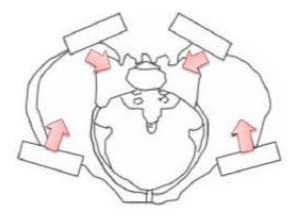
By wearing the pelvic unit and performing movements such as marching in place, walking, and squats, the pelvis is gradually guided toward a more symmetrical position.
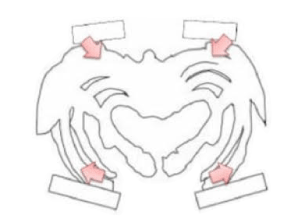
By wearing the rib cage unit and performing deep breathing, backward bending, rotational movements, and upper-limb exercises, the lower portion of the rib cage is gradually encouraged to expand more symmetrically on both sides.
The following examples show patients using ReaLine Core to improve body alignment.
At our clinic, we address a wide range of physical concerns, including posture problems, by improving the alignment of the pelvis and rib cage. Restoring more appropriate skeletal alignment may help reduce stiffness or restriction around the shoulders, rib cage, and hips, while supporting improved range of motion and deeper, more comfortable breathing.
We may also incorporate KAATSU training to efficiently strengthen weakened muscles and improve core stability. This can support better posture and help the body regain more natural movement patterns. As a result, unnecessary stress on the neck, shoulders, and lower back may be reduced, while everyday movement and physical performance may improve.
Improved posture can also help create a better foundation for treatments such as massage and manual therapy and may contribute to reducing chronic symptoms and preventing recurrence. Core stability can also support individuals who experience localized discomfort caused by repetitive movements such as walking.
These approaches are widely used not only by athletes for conditioning and by people working toward weight management goals, but also by individuals undergoing rehabilitation. By improving skeletal balance and creating a flexible, healthy spine and stable body axis, we aim to support a more comfortable and active daily life.
© Copyright (C) All Rights Reserved..


