


When you wake up and feel pain from the back of your neck down to your shoulder, it is often referred to as a “stiff neck” or “wry neck.”
Sometimes it hurts when you move your neck, and in other cases the pain is so strong that you can hardly move it at all.
It can interfere with daily activities, so early improvement is important.
With a typical stiff neck, neck movement is restricted, but a key feature is that no abnormal findings are seen on routine examinations or tests.
Symptoms are often said to improve within a few hours to a few days. In such cases, it is generally best to gradually start moving the neck again as the pain allows.
However, neck and shoulder pain can have many causes. More serious conditions may also be involved, such as cervical disc herniation, cervical radiculopathy, cervical myelopathy, ankylosing spondylitis, and rheumatoid arthritis.
Possible causes include poor circulation (ischemia) in the muscles due to unnatural posture during sleep or daily life, muscle spasms caused by unusual sports or physical work, or inflammation of the joint capsule of the cervical facet joints.
Causes that can lead to muscle ischemia/fatigue or joint capsule inflammation include overuse of the upper limbs and maintaining the same posture for long periods.
Even if you feel fine in the morning, prolonged PC work and other activities that place excessive stress on the neck can trigger symptoms that resemble a stiff neck.
If the pain is severe, you should visit an orthopedic clinic to rule out other issues by checking for numbness in the arms or legs, whether limb movement is normal, whether deep tendon reflexes are normal, and whether X-rays show any bone destruction or other abnormalities.
There are actually different types of stiff neck. Some cases involve injury to the fascia, while others involve injury deeper in the muscle.
For example, if turning your head to the right causes pain on the left side, there is a higher possibility that the fascia (the membrane covering the surface of the muscle) is injured.
On the other hand, if turning your head to the right causes pain on the right side, injury to the central portion of the muscle may be suspected.
The former tends to be more painful and may take longer to recover.
Many cases are caused by a mild muscle strain, but in rare cases, cervical neuralgia or a sprain of the cervical spine may occur.
Neuralgia is pain, numbness, or weakness that occurs when peripheral nerves are compressed.
An unnatural sleeping posture may compress nerves around the cervical spine and cause neuralgia.
If you have pain or numbness from the neck to the shoulder, arm, or fingers, neuralgia may be suspected.
A sprain is an injury that damages ligaments, tendons, cartilage, and other structures around a joint.
For example, if your head is extremely arched backward during sleep, the cervical spine can be sprained.
Rest is the basic approach. (Massage and stretching may help depending on the situation, but they can also worsen symptoms.)
In medical settings, anti-inflammatory pain relief patches, oral anti-inflammatory analgesics, and muscle relaxants may be prescribed.
If muscle spasms are the cause, certain herbal medicines sometimes used for muscle cramps may be effective, and in some cases, injections of a local anesthetic into the painful muscle or fascia can help.
Many patients visit our clinic with the symptoms described above. We do not simply provide massage and finish.
Using ultrasound imaging and manual orthopedic tests that are available at our clinic, we perform an accurate assessment, identify the cause, and provide appropriate treatment.
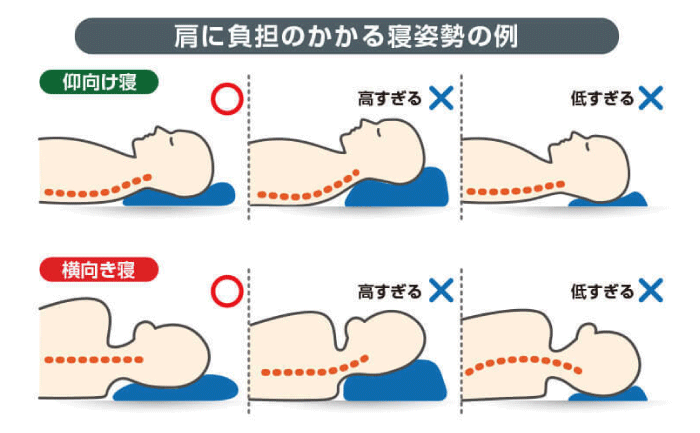
In addition to posture guidance such as standing and sitting, we also support relapse prevention through building a stronger body and optimizing your sleeping environment (pillow assessment).
Let’s work together to help you live a healthy, fulfilling, and vibrant life.
When mild stiff neck symptoms are triggered by neck or shoulder stiffness, accurately evaluating the condition of the muscles is important for improvement.
Healthy muscles have elasticity and resilience and maintain an appropriate balance (viscoelasticity). However, when muscle condition worsens, it may be classified into the following three patterns:
Shortened and hardened: the muscle shortens and becomes stiff.
Overstretched: the muscle remains stretched and becomes loose/weak.
Swelling/edema: the muscle becomes puffy or swollen.
Treatment differs depending on the pattern, and using 2D ultrasound helps make the muscle condition easier to understand.
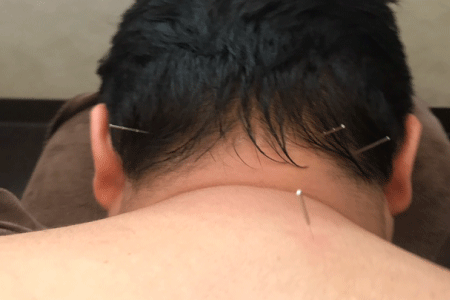
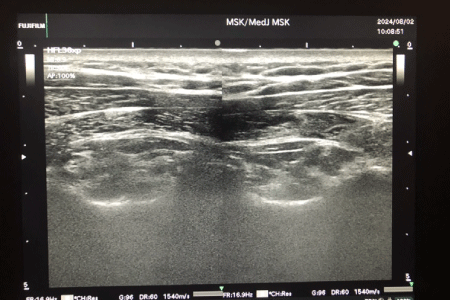
In this patient, increased intramuscular pressure and fascial adhesions can be seen on both sides in the left area of the ultrasound image.
In such cases, treatment using our Medical Plate can be effective.
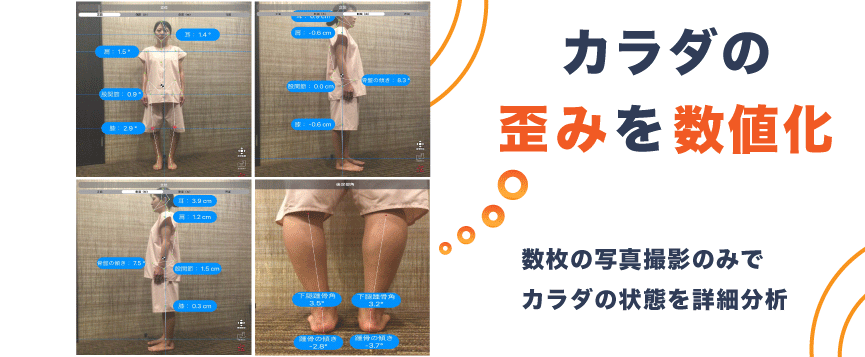
Based on your current posture, we can estimate which areas are likely to become tight, which areas may contribute to pain, and even your future posture.
This makes it easier to explain treatment strategy and expected effects in a way that patients can understand.
Patients can also better grasp their own physical condition.
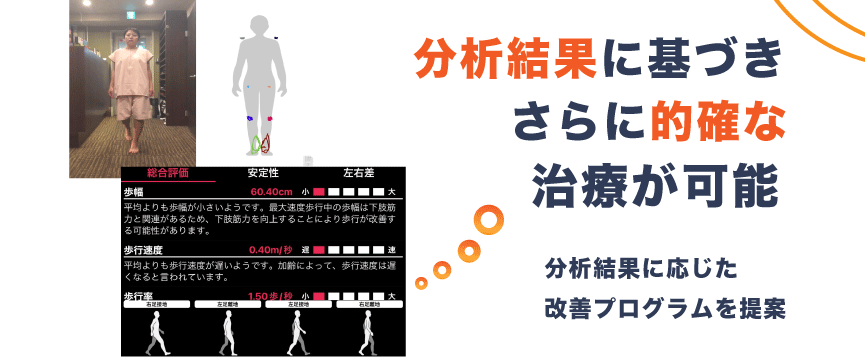
This helps us identify which muscles should be relaxed and which muscles should be strengthened through training.
By recognizing your own body, you can understand what needs to be improved.
Of course, it also enables more precise treatment.
Based on this analysis, we can teach you training and stretching methods tailored to your needs.
Prevention largely comes from reducing the daily load on your neck and creating an appropriate sleeping environment.
A stiff neck is often taken lightly, but the fact that you feel pain indicates that muscle fibers have been damaged at a level that is not visible.
Rather than doing forceful massage or stretching that could worsen the injury, we will work with you through rest and appropriate care so your symptoms do not linger.
After the acute phase passes and you move into the subacute phase, we will gradually begin rehabilitation training within a safe, pain-free range.
© Copyright (C) All Rights Reserved..